

Rett Ertl
A Remembrance

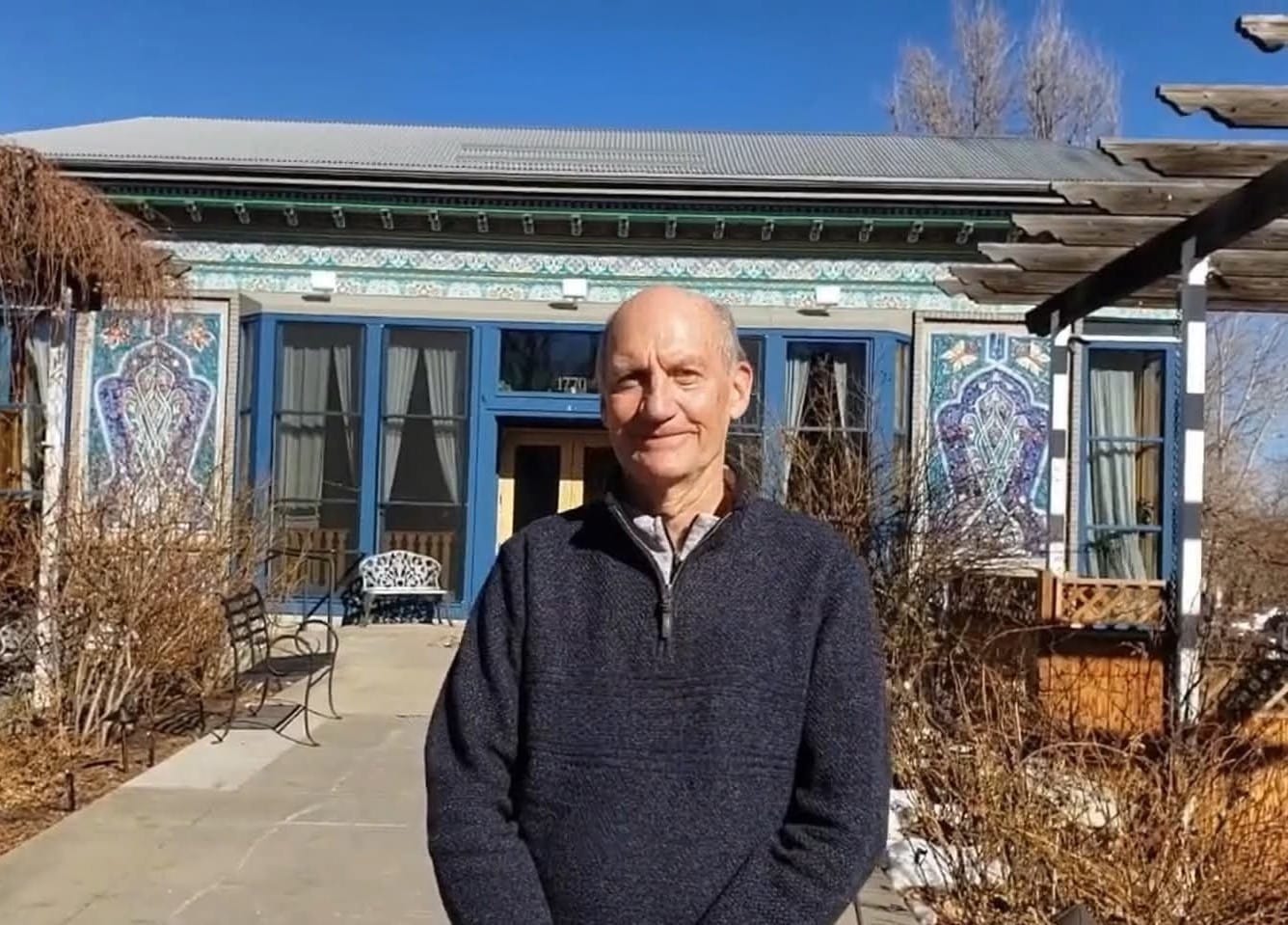
Rett Ertl was the classic American good citizen.
He and I met when we both were appointed to the local paper’s editorial advisory board. Once every two weeks the editor, an aficionado of the F-Bomb, would pose a question that usually had something to do with city council decisions or local Boulder issues. Our job was to respond to the question in a couple hundred words.These responses were printed in the paper.
At the time, the Boulder Daily Camera was being financially gutted by a venture capital firm that systematically sucked money out of newspapers they had purchased. This rapacious corporate behavior has happened throughout the country to the disadvantage of hundreds of thousands of citizens who care about local news—for the financial benefit of a very few people who think only of profit, never about the collateral damage of their greed.
Rett’s take on issues was almost always rational and well-informed. He was totally immersed in local issues and politics to the point where arguing with him was a great way to end up feeling like an idiot. I believe that he read the Camera from cover to cover every day.
His point of view was more conservative than mine...good, old time conservatism; not the nihilistic fascism disguised as conservatism of today.
When we were writing for the Camera, we were unceremoniously let go, while a colleague of ours, John Tweedy, was retained. I have no idea why Rett was let go, he seemed to very much represent old Boulder, the Boulder where your neighbor was likely a postman or plumber, or teacher; not a computer bro who had cashed out his stock and scraped off a perfectly fine old house to build a mansion to the lot line. I was let go because the editor thought I was unhinged for my comments on the oil and gas folks who built fracking infrastructure near residential areas and even schools. I called them criminals.
John Tweedy, a writer, filmmaker, and practicing lawyer, quit the advisory board in protest. Somehow the three of us decided to have breakfast. And continued to have breakfast together once a month until last fall when Rett was first diagnosed with esophageal cancer.
The venue started out at The Buff, a rather large breakfast and lunch place that was originally a motel breakfast spot on the north side of Canyon Avenue. The Buff may have been a little too slick for our tastes. Over time we migrated to the Parkway Restaurant, out on east Pearl Street, a slightly seedy, working persons’ place that serves a fine breakfast at a fair price. Firemen, car mechanics, and laborers eat at Parkway, as do defrocked local pundits.
John and I would typically order the same thing month after month. Chilaquiles for John and Mexican hash browns for me. Rett, on the other hand, almost always read the menu and would choose different meals as they suited him that morning. This was his meticulousness. It seemed that since he was in a restaurant, and he had all these choices, he should use the opportunity to actually choose something interesting instead of ordering the same old, same old.
Our discussions often covered local issues and sometimes state and national issues. Rett would start with a neutral question to get the conversation going. “What do you think about more rigorous enforcement of the non-camping ban?” or “Can the folks at Xcel Energy find their butts with both hands?” Once John had pontificated for a while and I had offered some half-baked thoughts on the subject posed, Rett would give a fair-minded, informed analysis and then often, an almost unassailable opinion. And then we would move on to another subject.
While John and I would occasionally talk about weight loss schemes, Rett didn’t join in because he appeared thin and fit, often showing up for breakfast in the summer on his bike. To start the conversation, every once in a while we’d talk about ailments, but we quickly got bored with our own tales of parts that didn’t function as well as they did when we were 40. Rett never mentioned anything about cancer.
My job at the end of the breakfast was to schedule the next meeting. John still works, so his schedule took priority. Rett and I were both retired and he would give us a wry look and say, “There is nothing on my calendar, I’m always open for breakfast.”
What struck me about Rett was his humility. Long before I met him, I had heard the name Ertl, usually in relation to property owned in Boulder or the Eldora ski area. While he never seemed overawed by anyone or any idea, he did not talk about the influence of his family in Boulder County unless it was germane to the discussion. It was just information, “My family owned such and such when this or that took place.”
Rett had gotten the book publishing bug from the success of a book he had done on Russian Matryoshka dolls or nesting dolls. I suppose it was an interest from his time working for the Agency for International Development that included places such as Turkmenistan, Kazakhstan, and Afghanistan. Rett spoke fluent Russian.
But as I knew him, he was working on a book about the history of the Eldora ski area. The Ertl family owned the land where part of the ski area was built. For three years, Rett had worked as the area manager. Both John and I ski, so his tales of ski area operation were a welcome relief from the seriousness with which we discussed local politics.
Since he had a lifetime pass and several lifetime guest passes to Eldora, he asked me to ski with him one day. The ski area management types that I’ve run into over the years have been, to a person, good to excellent skiers. Great form skiing is almost a requirement for ski area management.
Not in Rett’s case.
He had no form, he skied like a windmill that had come untethered and spun off across a field. His arms were akimbo as if he were flailing for balance. His legs seemed to not work well with one another, and his wide, sweeping turns at high speed seemed more a matter of luck and serious intent than anything else. But he skied fearlessly on the relatively flawed conditions common at Eldora.
I haven’t mentioned his service as president of the association that oversees the Dushanbe Tea House, a 20 square meter ornate building, constructed in Tajikistan, disassembled, and shipped to Boulder piece by piece as part of a Sister’s City project in the 80s. Nor have I mentioned his participation as a volunteer election worker. And I’m sure there are a number of other projects that he participated in that, out of humility, he never mentioned.
Because Rett was your classic American good citizen. He listened and learned, he participated and got the job done, and then he quietly moved on to another project. He made Boulder a better place. He will not be forgotten.
* * *
John Tweedy’s thought on Rett’s passing:
There are no goodbyes
Only our last time together
Which is not the last time
Because it cannot be the last time
Because if it is the last time then it is already over
Which it cannot be
Until it is
END
Endnote: Words have meaning but so do actions. Show up in your town, volunteer, protest, write letters but better yet, laugh at some of the stupidity around us, and keep resisting until you cannot. Rett did.
Thank you for reading Mountain Passages, pass it on.
Wonderfully written and a fine tribute. Remembering friends in this manner enhances the lives of all in your circle.