

The Garden in Fall
A Young Gardener Experiments

Thomas Jefferson was right when he said he was an old man but a young gardener.
I’m not about to suggest that I am old, although when I’m bent over puttering in my garden, and then stand up too quickly, the world spins and I need to grab and hold on to something to steady myself. But after 18 years of working in my small garden, I know even less about gardening than when I built it in 2007.
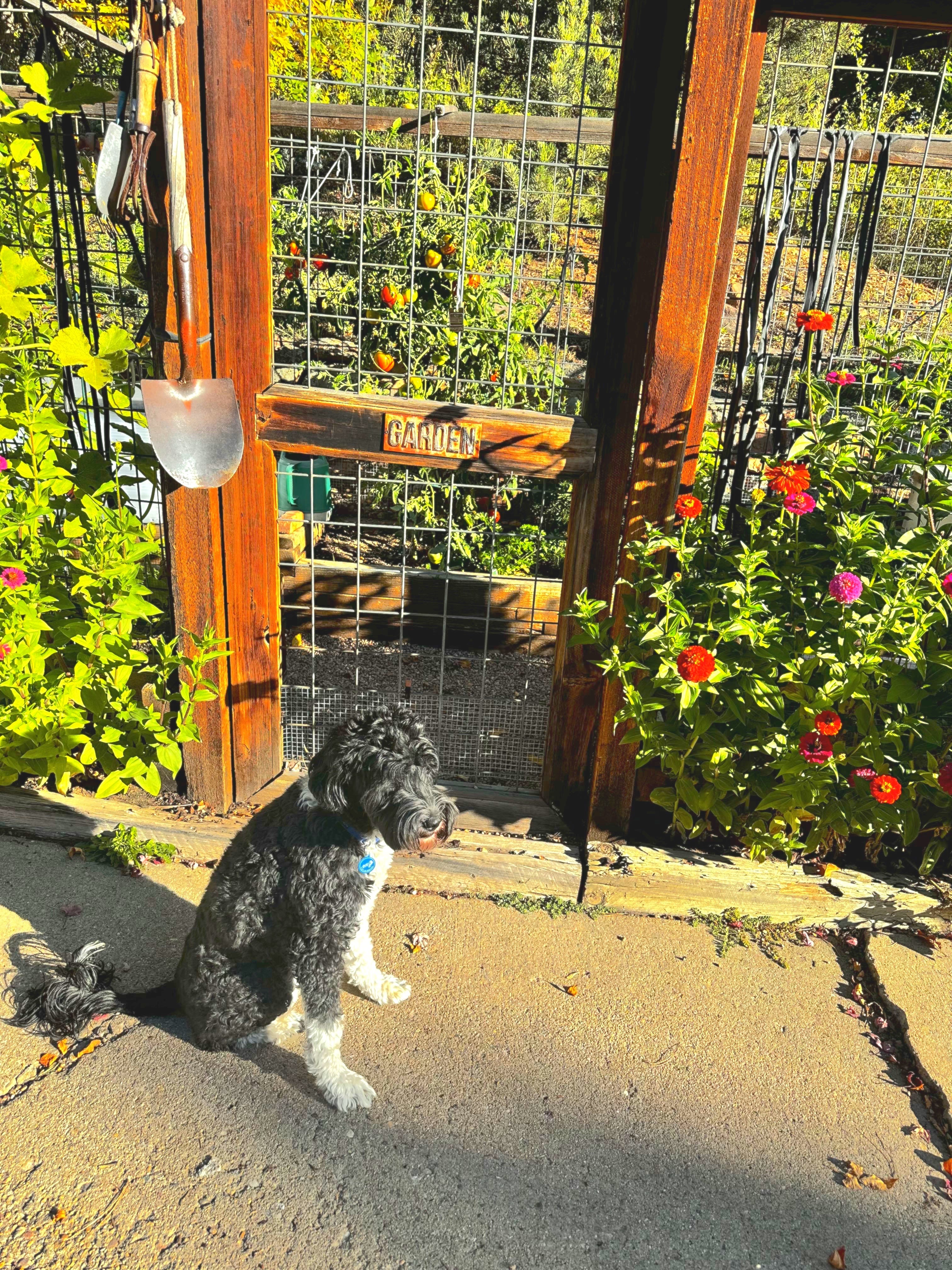
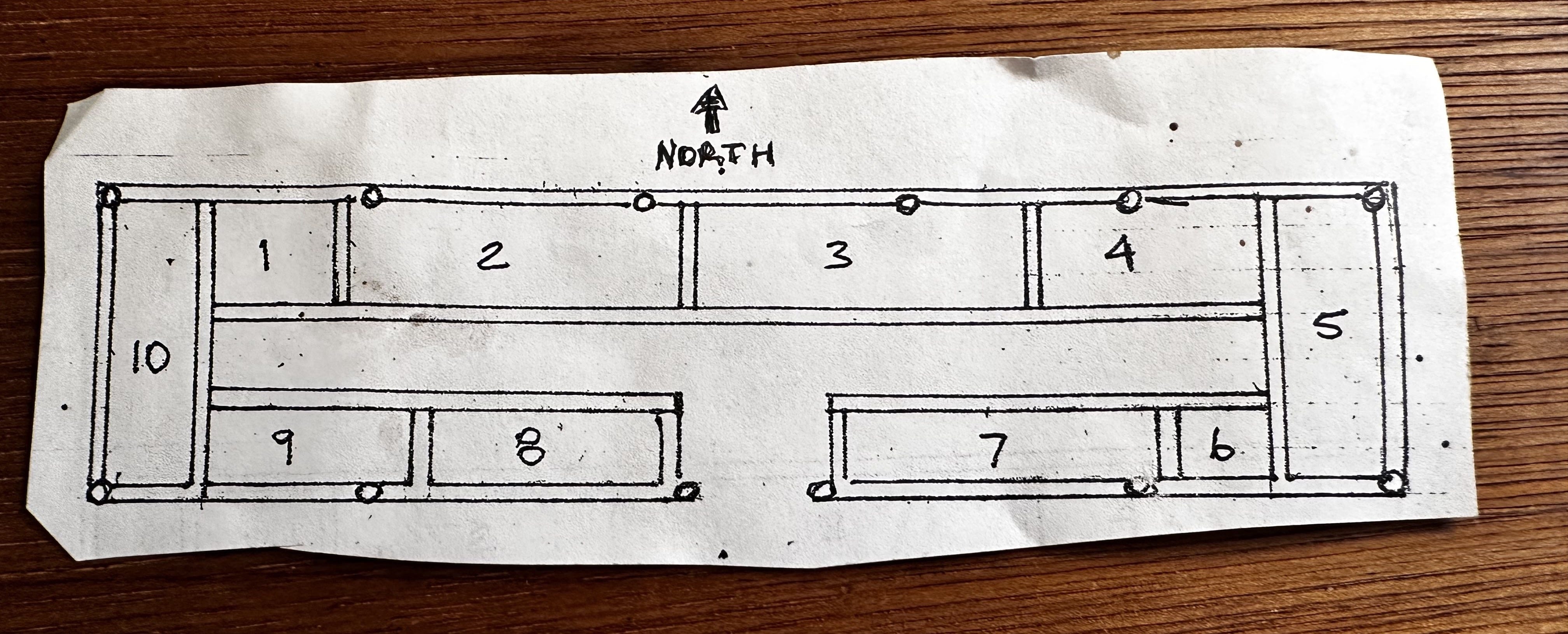
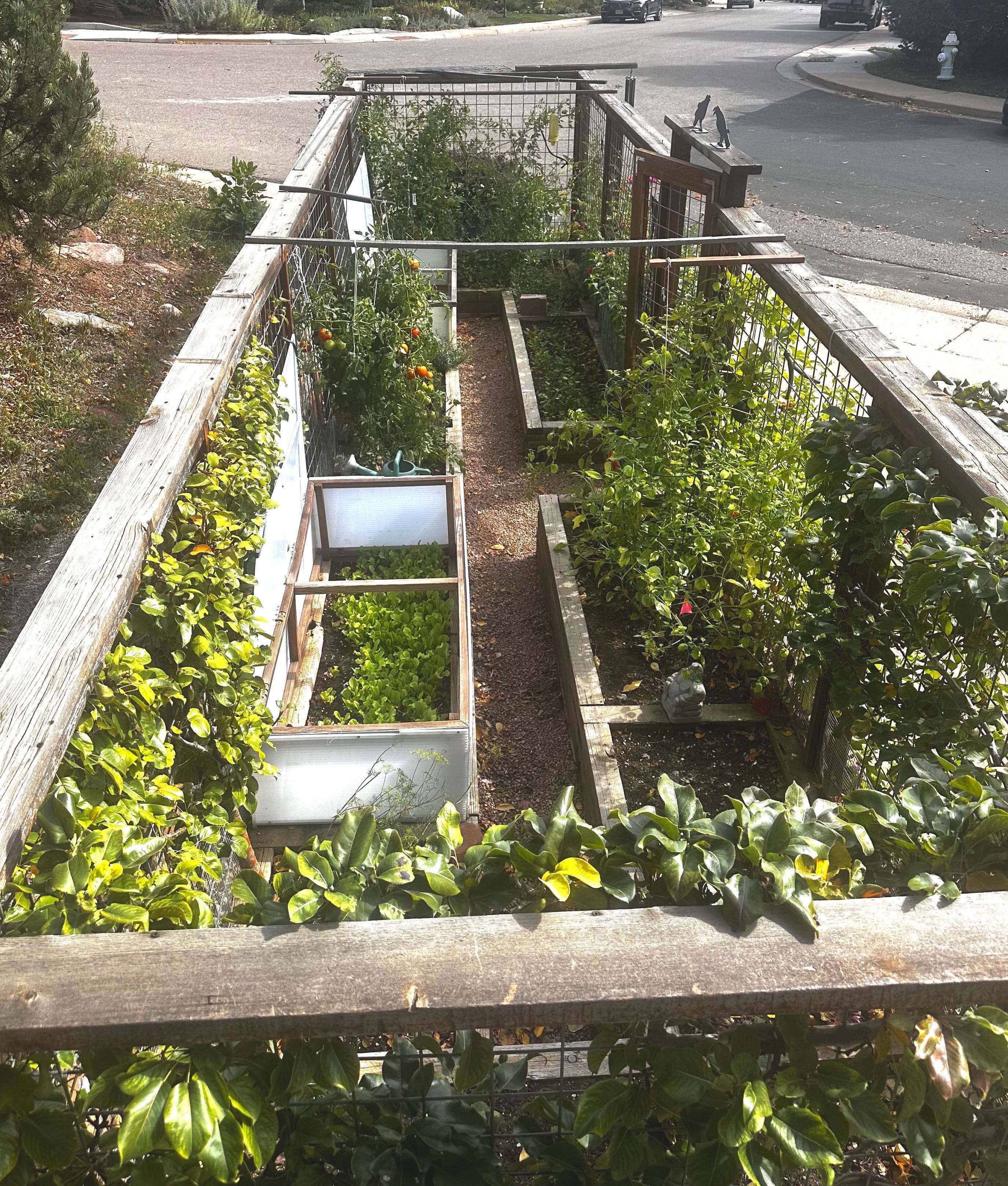
The garden is 7 X 30 feet surrounded by a six-foot pig wire fence. Ten raised beds are each 2 1/2 feet wide, about two feet deep, and various lengths. All the beds, except for the small border bed in front of the garden, are on a drip irrigation system tied to our lawn watering system. The garden faces south and east and gets sun most of the day.
It’s early October as I write this. That means warm days in 70s, cool nights in the 50s, with the possibility of a wet snowstorm before month’s end. It is harvesting time. Blue Eyes does most of harvesting, I love to grow stuff and eat fruit and vegetables from my garden, but I am not so good at harvesting. This is admittedly odd behavior, that I can’t explain.
Bed #1 has a Bartlett pear espaliered into the pig wire. I planted it seven years ago and it produced its first fruit this year. I believe it has been intimidated by the Asian pear that I planted in bed #10 when I first built the garden. More on that later. Because of the tree roots, I cannot amend the soil other than to top dress with compost, so I have had little luck growing anything at the base of the tree. We have not done well with dill sets from the nursery over the years, so this year I tossed some seeds that actually came up and produced some scrawny dill plants. I also planted a basil set that didn’t do well either.
This year I decided to plant multiple crops in each bed in an effort to produce more out of the garden. In Bed #2 I planted beets and carrots in two stages about three weeks apart. I was good about thinning the seedlings. The Chioggia beets were relatively small compared to the behemoths at Whole Paycheck, but beautiful with concentric red and white circles and delicious when baked. The carrots weren’t any better than what we can buy, so we added them to Carly’s dog food. She is not particular about which carrots she eats, as long as she can eat carrots.
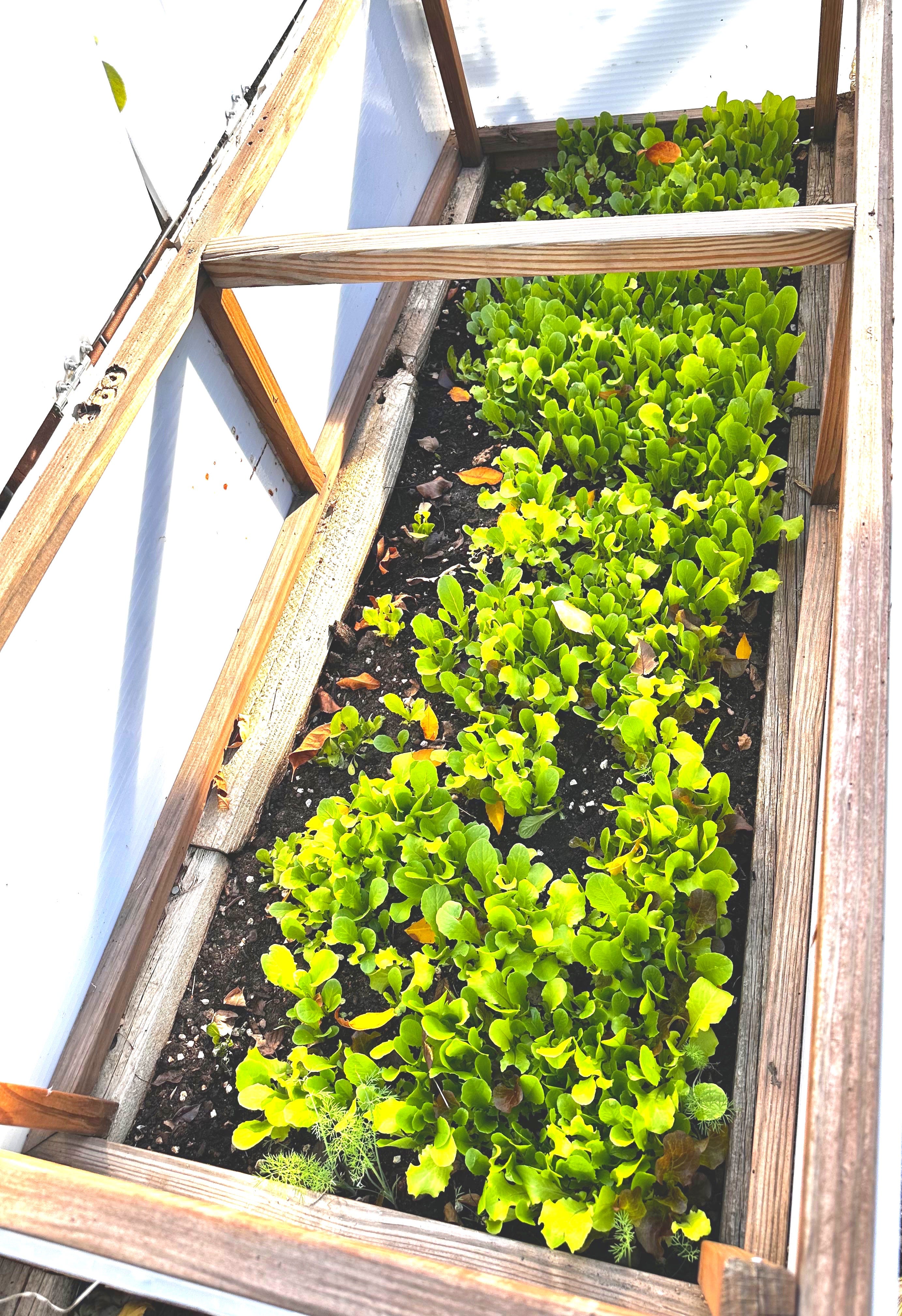
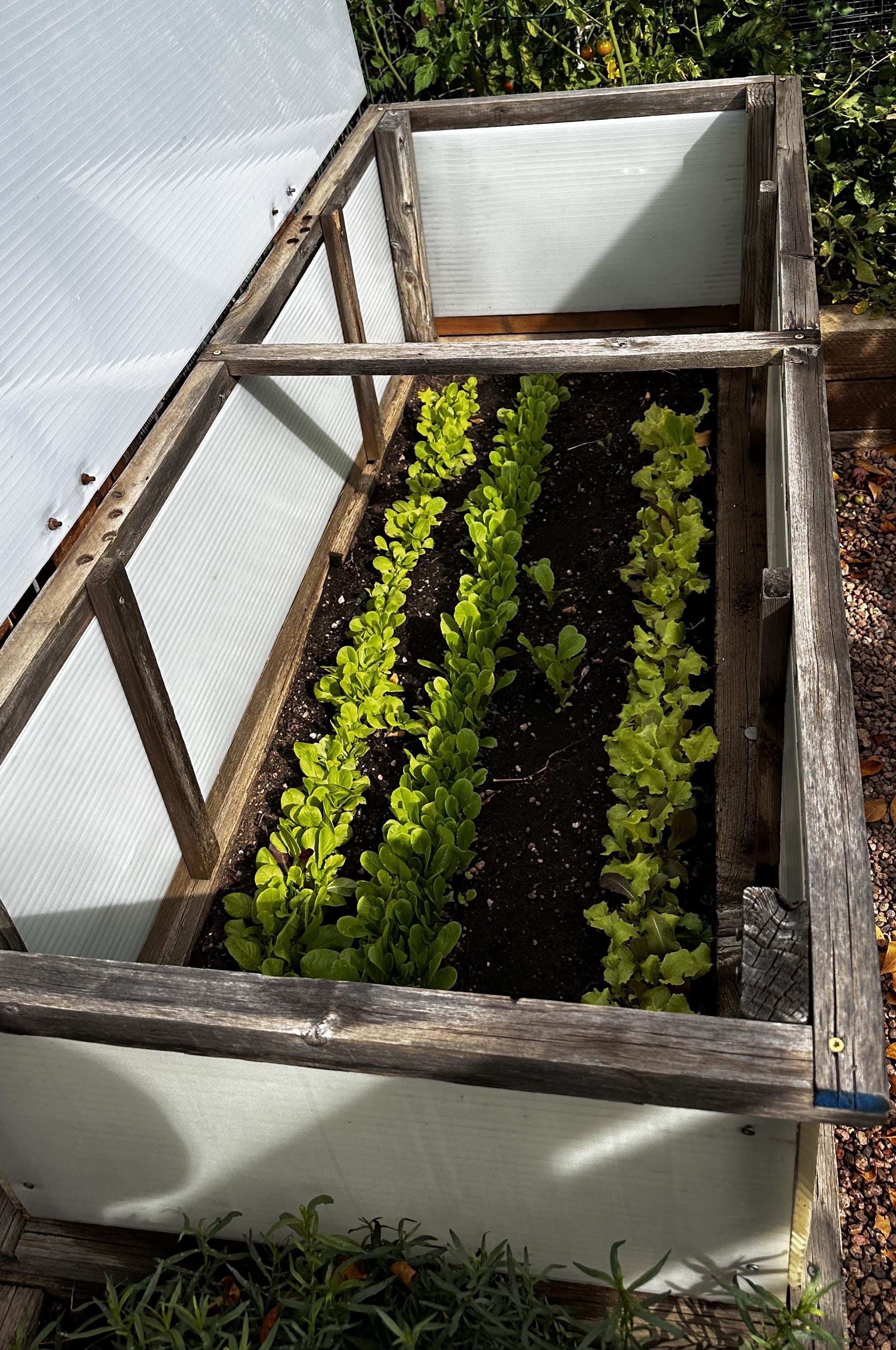
In August I took half of my left-over lettuce seeds, turned the soil in #2 adding some compost, put several shovels-full of the revived dirt in a bucket and smoothed out the bed. Then I just let fly with the seeds trying to evenly spread them over the entire bed. No neat lines, seeds everywhere in the bed covered with a thin layer of soil from the bucket. I’ve never been this out of control with planting seeds before. The goal is a lettuce patch in a cold frame for the fall and winter. It looks good so far.
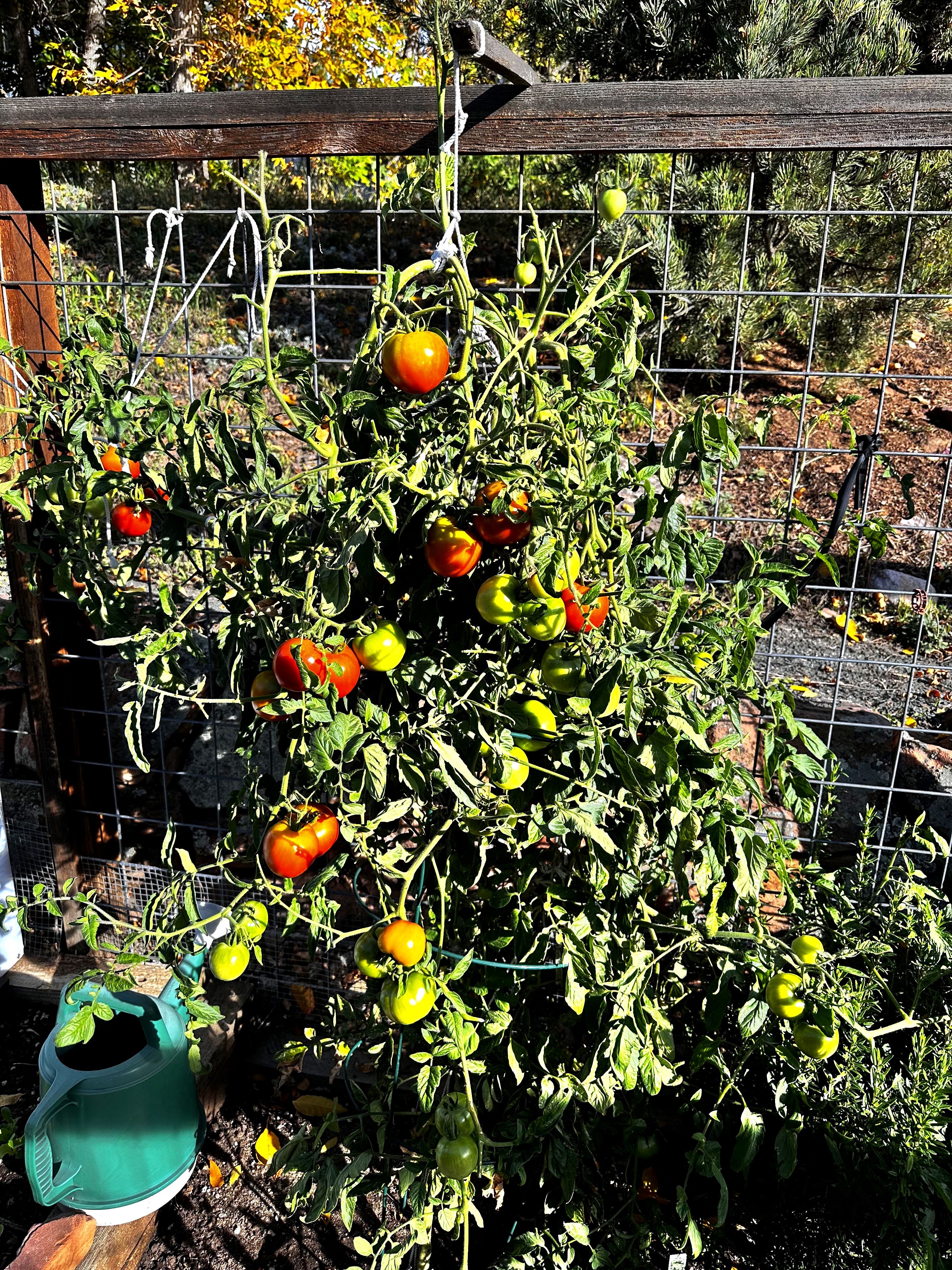
The herb garden, that is mostly Blue Eyes’ idea and work, is the second best bed in the garden. We have successfully wintered-over French tarragon, oregano, and English thyme and regular old thyme in Bed #3. After the average last frost in mid-May, we add basil, rosemary, and Italian parsley sets from the nursery. It seems to me that rosemary should winter over but I’ve had little luck with it making it through the winter so far. Maybe I will try it again this winter. As there was a little extra space in the raised bed, I added an Early Girl tomato set in mid-June and trained it to grow vertically. Whoa, did that work well. More red tomatoes than we can eat or give away—Bolognese sauce for freezer.
Bed #4 was a great bed until I planted raspberries some years ago that took over the bed, and overshadowed the beds around it. More bitching about raspberries a little later. This year I planted Walla Walla onion sets in #4. I’d planted onion sets before with limited success, but for some reason the Walla Wallas did relatively well. We got 20 or so medium-sized onions in early August. We are down to four now. We cook with a lot of onions.
That bed was refreshed in late July after the onion harvest. I planted the other half of my lettuce seeds in three neat rows with the intention of not thinning them out but letting them grow in lines of lettuce plants that I could cut close to ground level to eat and hope that new leaves would grow back for a second harvest.
The bunnies did a wonderful job of eating the lettuce right down to the ground. Fucking bunnies had to jump off a three-foot rock wall and through 4-inch squares of welded wire fencing to land in my new lettuce patch. I put up the cold frames on #4 a well as #2.
“Go ahead, hop two feet in the air over the top of the cold frame and try to get to my lettuce again you assholes.”
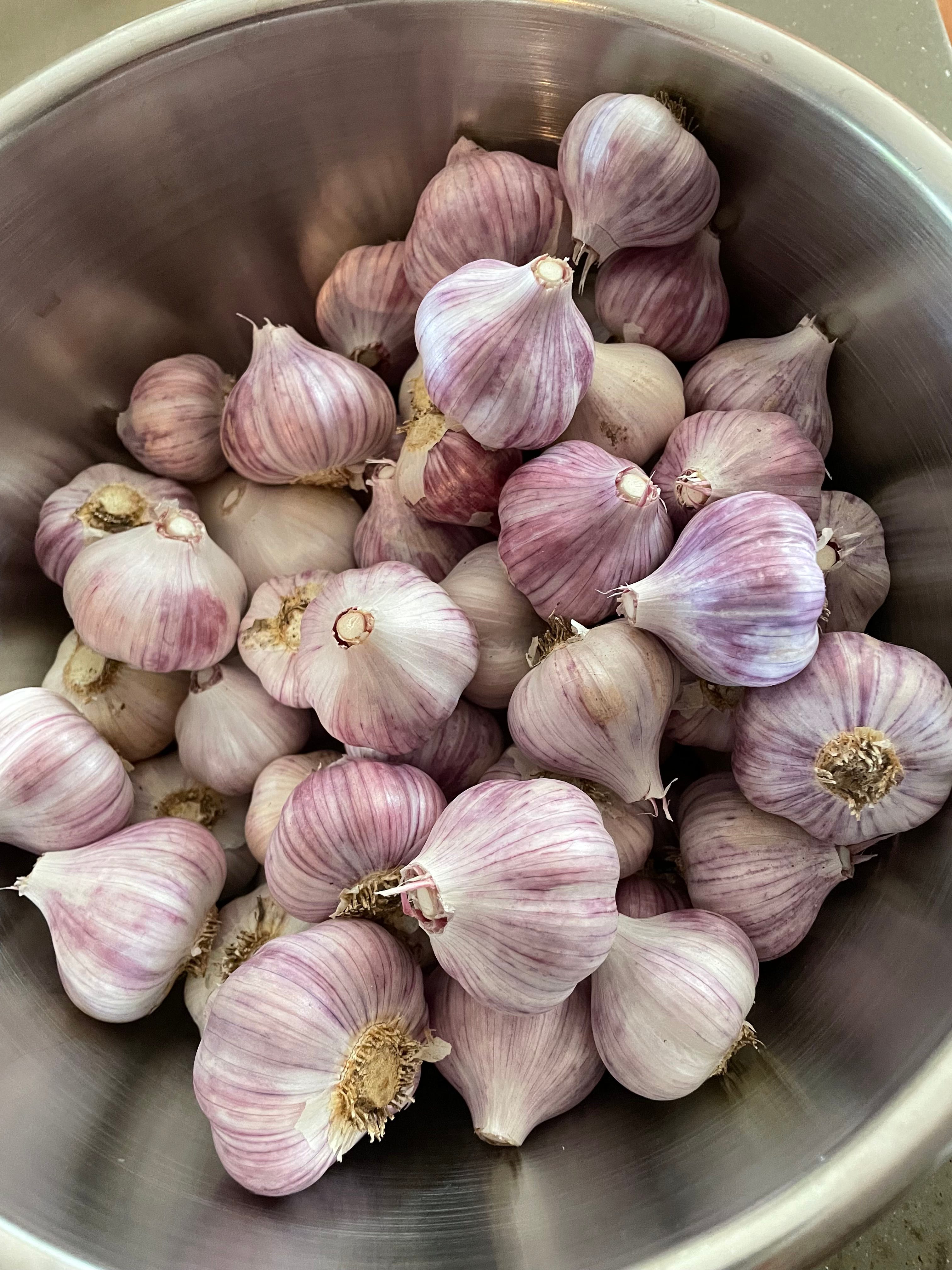
After the garlic came out, I processed the soil as I did for lettuce in #2. Just after Halloween I usually plant two beds of garlic cloves. About eight months later, around the Fourth of July, I will harvest 40 to 50 bulbs of garlic and then dry it in the garage. This usually gives us garlic through at least Christmas. One of the garlic beds this year was #4. I try to rotate beds year to year. One year garlic and onions, the next tomatoes and tomatillos. I’m not sure that this is a proper rotation from a soil nutrient point of view, but it seems to work.
On the east end of the garden is Bed #5 overrun by two Sun Gold tomato plants. This was a raspberry patch for about six years until the raspberries got some sort of rot and quit producing. Seems like this is my bed for excessive plants. To say that raspberries are invasive is like saying bears like garbage cans. The raspberries were great in the late summer but keeping the plants from taking over the garden was a summer-long task.
To remove my raspberries, I dug out the bed, and sprayed the remaining roots with industrial strength vinegar and dish detergent. With the Sun Golds, I let one plant grow wherever it wanted to go and I grew the other plant vertically. After the plants started producing in early August, I discovered that the ‘free’ plant was outproducing the ‘vertical’ plant by about four to one. My conclusion is that growing tomatoes vertically depends on the variety. Early Girls are great producers growing vertically, Sun Golds, not so much.
Bed #6 is small and designed to grow a fruit tree, but that was a dumb idea because the tree would have shaded part or all of beds #3 thru #5. Because it is so small, it has been a disappointment. This year I planted dill seeds with minor success.
One of my champion beds is #7. The garlic started peeking through the snow in late February. In late April I planted cilantro seeds between the garlic plants. It worked. The cilantro and garlic got along together. I also experimented with garlic by planting a row of cloves from Whole Paycheck, and a row of cloves from a stall at the farmers’ market. Both those rows were below-average producers. The row of Bogatyr and Purple Deerfield garlic that I purchased online were excellent producers.
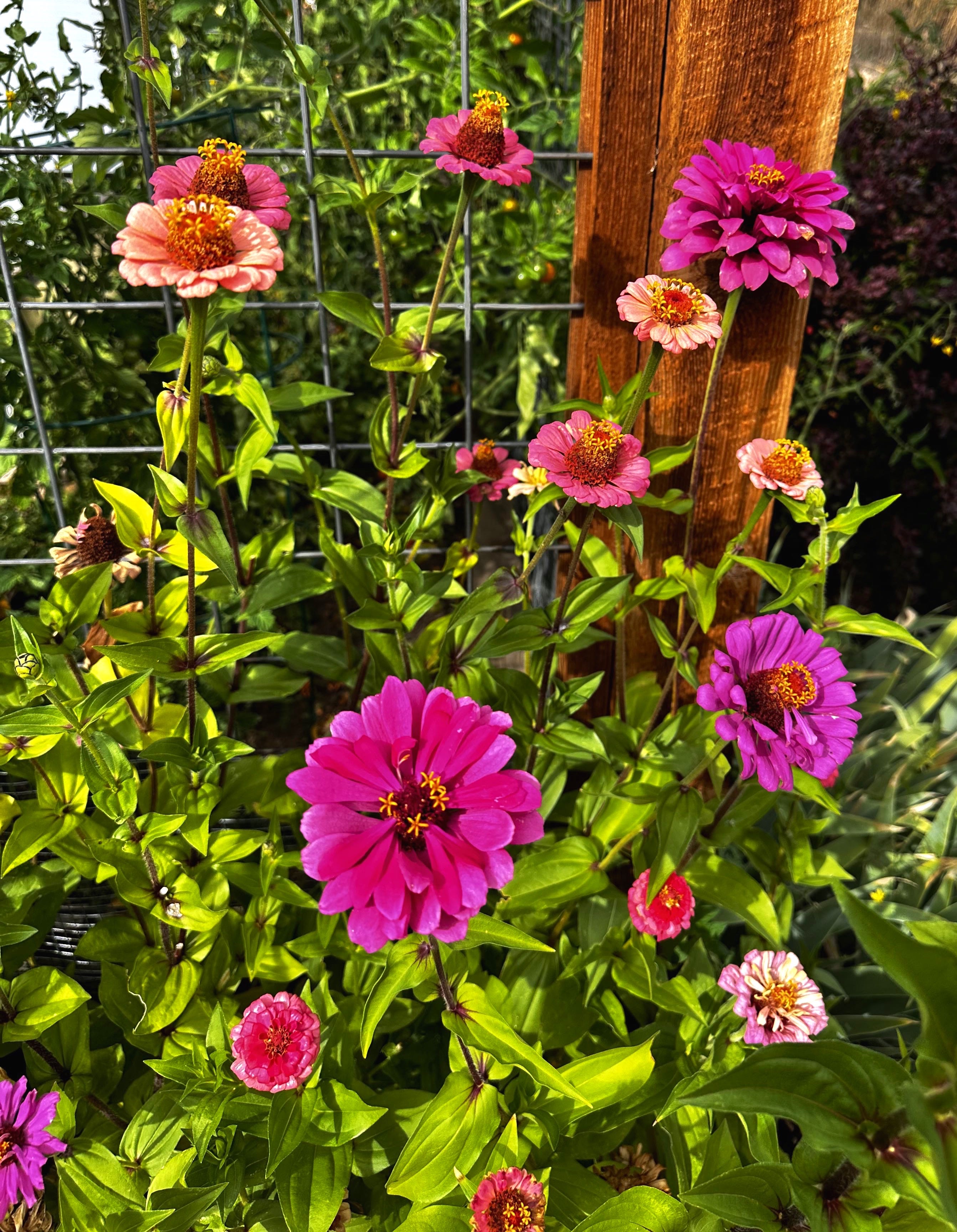
At this point I need to explain that there is a small border bed on the south side of the garden that is about six inches wide. In May I mix up a couple packs of zinnia seeds and plant them. By mid-August we have a three-foot high border of multicolored zinnias that Blue Eyes cuts for bouquets. Lovely. But the zinnias block the sun to the beds behind them, so #6 thru #9 don’t produce much after early August.
Last spring in Bed #8. I planted three tomatillo plants and an acorn and butternut squash with the idea that all would grow vertically. It was too much of a load for one bed. The squash was slow to grow up the pig wire because they were crowded by the tomatillos. The tomatillos were too close together and turned out scrawny. Too much ambition and too little careful thought on my part. However, I got enough tomatillos for one batch of sauce that Blue Eyes made using our own garlic and cilantro. Yum.
The lost cause in the garden is Bed #9 under a Shinseiki Asian pear that shades it most of the day. Conversely, I consider Bed #10, where I planted the pear in 2007, to be my best accomplishment so far as a young gardener.
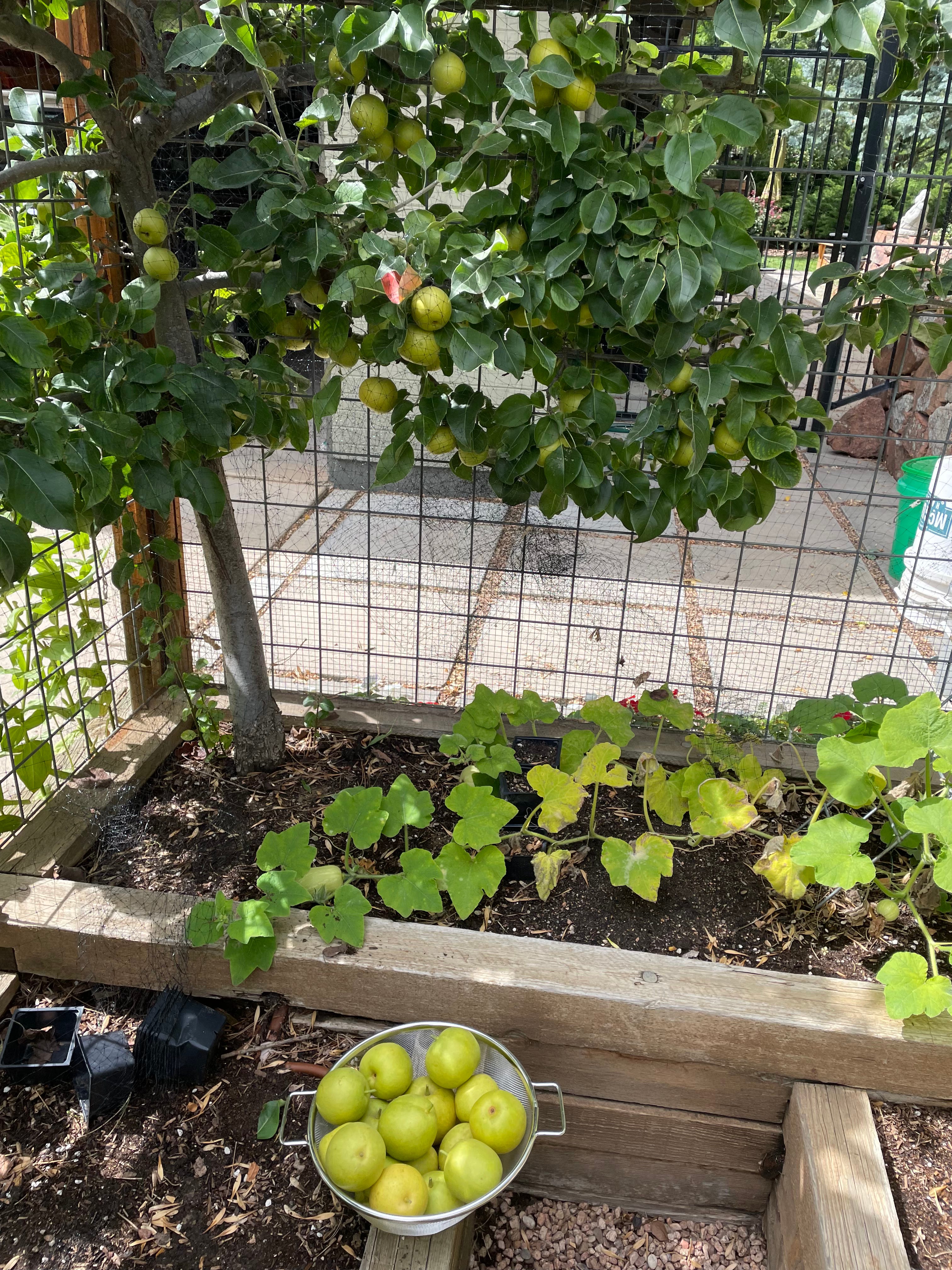
The Shinseiki has thrived for a number of reasons. It is protected from the wind by the east side of the house. To the north there is a rock wall that radiates heat in the winter. But it is mostly luck and climate change that has led to a small annual harvest each fall of the sweetest pears I’ve ever eaten.
That’s the short version. There are tales to be told about my garden that I’ll save for “The Garden in Winter” that I’ll post in February.
END
Writer’s Note: I’ve been writing and editing Mountain Passages for about a year. The theme has been, “Short essays, opinions, and stories—some curated, some reasonable, and some true.”
Most of the essays have been mine, but from time to time, I have posted essays from friends that I enjoyed reading. I understand that success on Substack comes from writing highly focused essays on discrete subjects, but that is dreadfully confining, lock-step, and ultimately seems to me to lead to writer and reader burn-out. If we are friends, you understand that I am going to do exactly what I want to do with Mountain Passages. But I am curious and need to ask: Do multiple subjects from a variety of folks writing short essays work for you?
If you are a paid subscriber (thank you) comment below. If you are a free subscriber, send me a note at alanbearstark@gmail.com
I have worked at all sorts of jobs starting as roustabout at a department store tent sale when I was 16 where I was fired for telling the boss he had the floor plan upside down. And ending as a backcountry ski patroller in the Boulder Ranger District. Now, writing for Substack is my work. I appreciate being paid for my work. If you are a free subscriber and have been regularly reading Mountain Passages over the year, please consider a monthly subscription that is only five bucks.
I’m alanstark1@substack.com Thank you for reading Mountain Passages, past on the post please.