

Pushing the Expiration Date

My doctor is from South Carolina and has an easy, slow speech cadence that hides a quick wit.
I was in for my annual “wellness” check at Kaiser. In olden times this was called a physical. That meant a head-to-toes check that took a half hour and always involved a dreaded prostate check called a digital rectal exam. “Drop your drawers, bend over, don’t complain.” On this day, the doc stared at a variety of blood scans on his computer that he ordered several weeks before the wellness exam.
He nodded and mumbled to himself as he did the review. At the end of which he said,
“Looks good. Have you got anything you want to talk about?”
“My property taxes have doubled in the last three years.”
“Mine too, anything else?”
“From my records you can see that I’ve been checked out for chest pain.”
“Yup, your heart looks good. We should check out your esophagus.”
“Okay. Endoscopy right?
“Yup, we can do both at the same time.”
“We can do what at the same time?”
“A colonoscopy. I’ll order an endoscopy for you, and as long as you are under anesthesia, we can do a colonoscopy at the same time.”
“But, but, but . . .”
“You’re due for a colonoscopy in a year. Might as well get it done now.”
“They won’t use the same scope for both procedures, will they?”
“They’ll do the endoscopy first.”
“You didn’t answer the question.”
Sometime in my early 40s, my doc told me to schedule an appointment for a sigmoidoscopy— a colonoscopy light. As is normal for me, I did a frowny face, and he said, “Colon cancer is 100% preventable. All you have to do is go through some discomfort every ten years.”
More than 50,000 people die annually in the US from colorectal cancer. Needlessly. Colonoscopies used to be initiated at around age 45. What is scary now is that much younger people are coming down with colorectal cancer at stage III and IV, which makes treatment difficult. Initial studies suggest an inherited genetic predisposition plays a role in this new trend. If you are under 40, but colorectal cancer has occurred in your family, see your doc.
But none of this suggests that preparing for a colonoscopy is easy. For example, I had a colonoscopy scheduled for Tuesday morning. I started fasting Sunday morning. The five-page instruction from the gastroenterologist said that broth is okay to drink during the two-day fast. I drank four cups of vegetable broth and two cans of clear, no-calorie soda. I was sloshing around.
Fasting is a mind game. It’s a stoic sort of thing to do. Don’t think of food. Just erase it from mind every time even a crumb of a food thought appears. The other thing I did was to go for a five-mile run on an empty stomach. What might appear to be seriously dumb actually worked out fine. The run erased any thoughts of food. I’ve been doing two- and three-mile runs for months, so five miles was just a stretch, not something truly stupid. Sunday passed easily.
Usually the fasting for a colonoscopy is only for a day but I’m taking a GLP-1, which causes some back-up in the lower GI system. After one and a half days of fasting, the real siege begins with drinking a cup of awful liquid every 15 minutes for two and a half hours.
The prescribed laxative comes as powder in a plastic gallon jug. With the addition of a lemon-flavored powder and water, the stuff is almost drinkable. Sort of like what the water in the dog bowl might taste like after sitting in the sun all day. Sixty-four ounces of liquid in two and a half hours is extreme.
The results are as expected. And fast. A friend once called it, “colon blow.” Don’t plan on being far from a bathroom for some period of time.
More cups of broth and cans of water follow to stave off hunger and maintain hydration. Other than spending time reading, Monday was essentially a day lost, mostly while in a sitting position in the smallest room of the house.
What followed was a fitful night of sleeping on top of the covers in my sweats and socks under a blanket in case I had to move quickly to the bathroom. And I did.
The second round of drinking out of the dog bowl started at 5am Tuesday morning. It was bad enough to be up at this time of the morning. But then to have to drink six more cups of the evil liquid and deal with the inevitable result was extraordinary—and not in a good way.
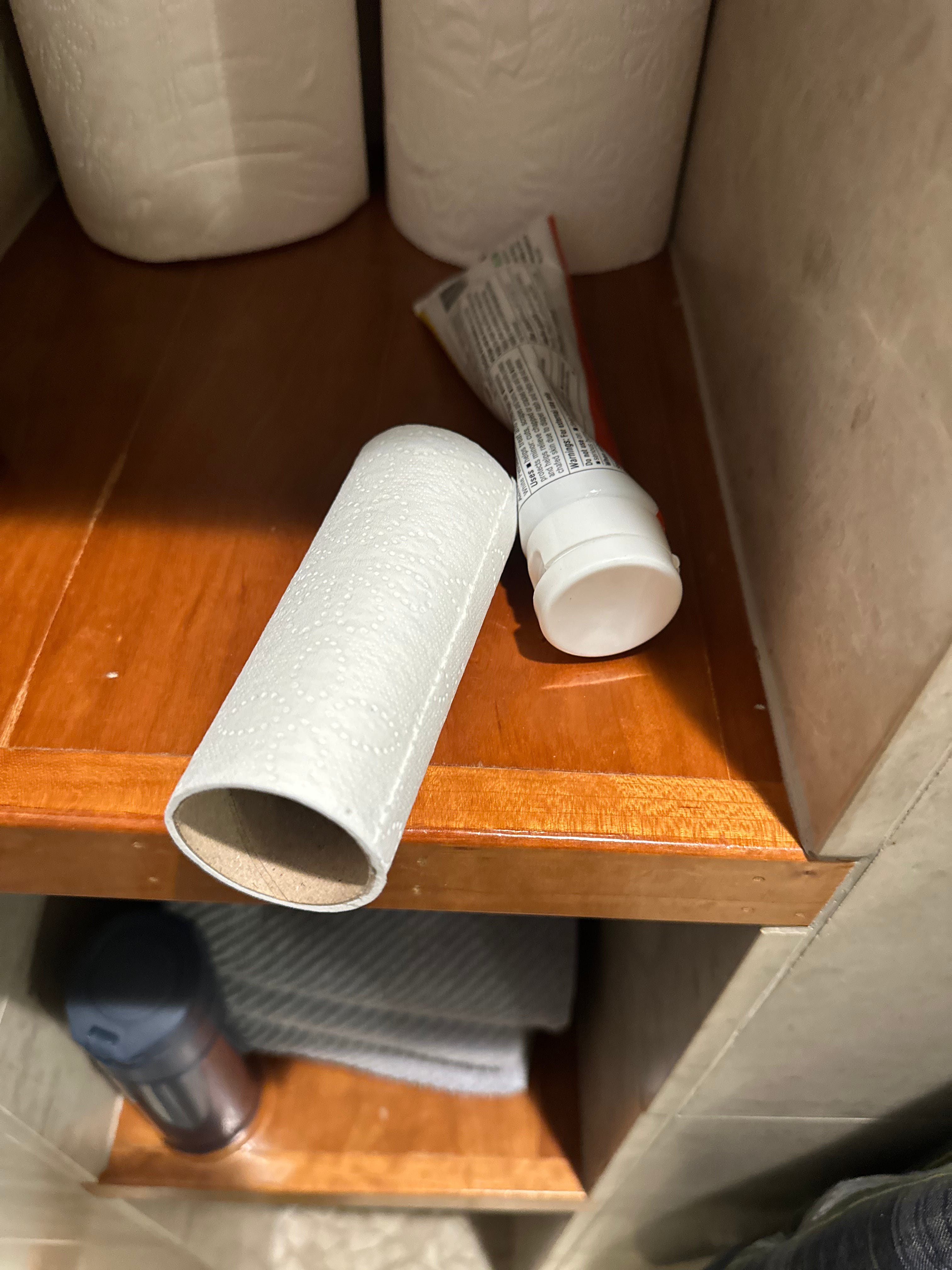
After a roll of toilet paper and half a tube of Vitamin A and D ointment for a sore butt, the worst was over by 8am.
My appointment was for 10am, but Kaiser wanted me there 45 minutes beforehand. Once there, nothing much happened besides a visit or two to the bathroom, until a nurse came around and let patients know they were running late.
A half hour later, I was called and escorted to a bay with a gurney in it. The prep began with a change into a backless patient gown and then a series of questions about what and when I had consumed it in the previous two hours. Per instructions, nothing. And then the nurse put in an IV for the anesthetic.
I was then wheeled into a procedure room with a doctor and nurses moving around in a coordinated dance, under a conversation about the impending snowstorm. Next, I was asked to roll over on my side. Then I was out, gone, unconscious.
In the recovery room, I felt great as I woke up. What I didn’t know was that I was pretty much out of it in a drug-induced haze, carefree and with the attention span of a puppy.
The doctor came in, and I noticed that she looked stressed out. While I just noted the stress, I didn’t think it had anything to do with me. Blue Eyes listened to her and looked stressed out as the doctor explained the results of the endoscopy.
I sat there on the gurney like a large family dog in the living room, looking from person to person during a conversation, understanding little and retaining nothing. And then the doctor pointed to a small picture of my upper stomach. The images of my esophagus were skin color to a darker hue of pink. The image of my stomach was a gnarly brownish black that even in my semi-euphoric state looked bad.
The doctor said that my gnarly-looking stomach lining could just be inflamation, but that she had taken biopsies at six different sites. That didn’t register as threatening either. She did not use the word cancer.
I do remember Blue Eyes saying that I took ibuprofen like dog treats and that I loaded hot sauce on just about everything savory that I ate. And then there was some nodding of heads and looks at me that basically said, “dumb shit.”
Afterward, we went to the Hungry Toad, where I consumed a huge Reuben. Once home, I took a long nap. I got up, still feeling carefree and slightly groggy. We went to a sushi dinner, then on to an E-Town radio show taping.
It wasn’t until the next day that I slowly realized that the doctor didn’t know why my stomach lining looked like a slaughterhouse floor. There was a chance I had stomach cancer.
“I wondered when it would hit you,” Blue Eyes said.
“Just now, like I was skiing in the backcountry and suddenly surrounded by a pack of snarling wolves.”
There is a day or so between biopsies and receiving test results. This is a period of simple fear. An internet search for stomach cancer reveals an endless pit of bad things with worse outcomes that have expiration date as a blaring subtext. Then there is stoic switch within that brings some relief: “You have cancer or you do not have cancer. You have no control over the outcome. The test results will come when they come. Get on with your day.“ Despite this advice to self, all day long and into the night, I checked the phone intermittedly for a notice of test results.
During that time, I was adrift. Was I looking at the rapid end of my life? Was I going from an active person to a patient? What was going on inside me? How could I have cancer when I felt fine? How would I handle surgery and chemotherapy, or whatever treatments were headed my way? Was my imagination running wild? Was this it—the inevitable expiration date?
I thought about trying to write what I felt. There was anxiety, rationalization, and reasonableness, each following the other and then repeating. But the ultimate feeling was one of hollowness, as if the core of my being had been placed in limbo. That I was this stray dog caught in median of a turnpike.
It was Thursday morning. I had gone to HIIT training at 8am and met an old colleague for coffee at 9. As I walked to my car after coffee, I thumbed my smartphone and saw the test results message. Once seated in the car, I put the phone down and thought for a moment. “This is a crux. Bad news or good, I will remember and I will move on.”
Halfway down the jargon-filled message, it read, “Negative for evidence of dysplasia or malignancy.”
My expiration date has been extended.
END
Writer’s Note: As always, thank you for reading my essay, and for your comment just click on the button below.
Subscriptions are appreciated. To get a free Substack subscription to Mountain Passages just click on the button.
The small box with the upward arrow at the bottom of this page will give you a link to share this essay just about anywhere with just about anyone. Thank you for considering a Share.
If you have a Substack account, click the circle of arrows at the bottom of the page to ‘restack’ or add this essay to your page.
We are mountainpassages@substack.com
Dopey limbo is never fun, that’s for sure! Welcome back into your body. It’s safe to return! Now about that brown sludgy stomach lining. It’s a shame the gallons of interior rinse didn’t touch it. I’m guessing your doctor will remain curious. We all want to know what it is. Now that we know what it isn’t, thank Ullr!
Appreciate you reminding me (I think) to check when I’m due for my next porcelain horseshoe reunion. Kaiser doesn’t seem to be consistent about that anymore. Yeah, I’ll get on it.